Skeleton Stained Glass Tumbler Design: Graphics for Crafts-Driven Brands
First Impression: Gothic Charm Meets Handmade Warmth
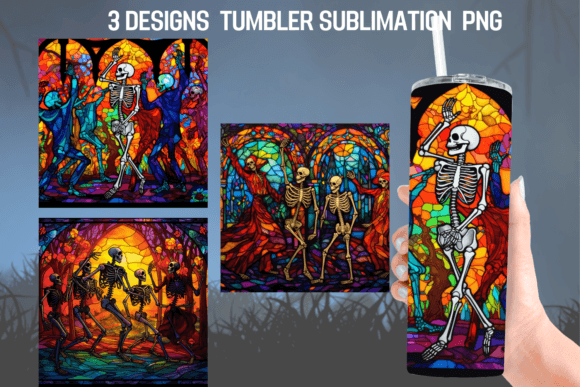
When I opened the Skeleton Stained Glass Tumbler Design file, I felt an immediate shift in tone—like stepping into a candlelit apothecary or a vintage-inspired bakery during Halloween season. It’s not spooky in a costume-store way; it’s elegant, detailed, and quietly narrative. The interplay of bone structure and stained-glass geometry suggests craftsmanship, intentionality, and a touch of theatrical storytelling. This isn’t mass-produced clipart—it reads as a considered illustration, with layered transparency, subtle color gradients, and clean line work that holds up at scale. For local businesses rooted in authenticity—think handmade soap studios, indie florists, seasonal candle brands, or boutique coffee roasters—it signals artisanal care without sacrificing visual impact.
A Brand Identity Anchor for Seasonal & Story-Driven Businesses
I recently used this design while developing packaging and social media graphics for “Hearth & Hollow,” a small-batch candle brand launching a limited “Midnight Botanical” collection. The Skeleton Stained Glass Tumbler Design became our unifying decorative motif—not as a logo, but as a brand signature. We applied it to product labels (as a border element), hang tags (scaled down with foil stamping preview), thank-you cards (centered with serif typography), and Instagram story templates (animated with gentle opacity shifts). Its gothic-but-gentle aesthetic reinforced their brand voice: mystical, grounded, and deeply local. That’s the real power of this graphic design asset—it doesn’t shout; it invites closer looking, building emotional connection through consistent, thoughtful repetition.
Where It Strengthens Real Local Business Presentation
- Stronger first impression: Used on tumbler mockups or product photography, it instantly elevates shelf appeal—especially against neutral backdrops like kraft paper or matte black packaging.
- Better product recognition: When repeated across stickers, menu headers, and takeout bags, it becomes a visual shorthand customers begin to associate with your shop.
- Clearer visual hierarchy: Placed as a top or bottom accent on labels or flyers, it frames core messaging without competing with essential text like flavor names or ingredients.
- More consistent brand identity: As a scalable, high-resolution PNG design, it maintains fidelity across print and digital—critical for small business branding where resources are lean but expectations are high.
- Improved customer trust: Thoughtful, cohesive decoration signals professionalism—even for handmade businesses, polished marketing visuals reduce perceived risk for first-time buyers.
Best Use Cases: From Packaging Accents to Social Campaigns
This Skeleton Stained Glass Tumbler Design shines brightest where atmosphere matters most. It works exceptionally well as:
- A decorative frame around product labels for candles, bath salts, or small-batch syrups
- An overlay on website banners or email headers for seasonal promotions (e.g., “Spooktide Collection”)
- A background texture—lightly desaturated—for printable inserts inside gift boxes or subscription kits
- A hero graphic in Canva templates for social media ads targeting local events or farmers’ markets
- A subtle watermark on thank-you cards or loyalty program graphics for boutique stores
- A recurring motif in packaging design for holiday or limited-edition runs—especially when paired with tactile finishes like embossing or spot UV
Where to Apply Caution—Not Every Context Fits
While versatile, this graphic design asset isn’t universal. Avoid using it:
- In formal corporate branding—its ornamental nature clashes with minimalist or boardroom-ready aesthetics
- On very small labels (under 1.5” width) where fine stained-glass lines may blur or lose definition
- In ingredient-heavy layouts where visual noise competes with regulatory text or allergen statements
- Over low-contrast backgrounds (e.g., light gray on white) without testing print legibility
- Alongside ultra-thin or ultra-light fonts where hierarchy collapses
- In luxury minimalist brands where restraint is the core value—here, less truly is more
Practical Designer Notes for Small Business Owners
Before finalizing any use of the Skeleton Stained Glass Tumbler Design, run these checks:
- Test it on real packaging mockups—not just digital previews—to assess how transparency interacts with substrate color and texture.
- Check black-and-white usage: convert to grayscale to confirm contrast remains strong for accessibility and monochrome printing.
- Preview it on small labels at actual size—zoom in to verify no pixelation in fine glass-line details.
- Test it beside your brand’s primary typefaces: does it harmonize with your serif, sans serif, script, or handwritten fonts—or create unintended tension?
- Compare it against competitor packaging: does it differentiate your offering or unintentionally echo another local brand?
- Review PNG transparency edges—clean alpha channels are essential for seamless integration into Canva templates or editorial design layouts.
- Confirm commercial licensing covers physical product sales, client work, and promotional use—this is non-negotiable for small business branding and handmade business growth.
Final Thought: A Decorative Asset with Strategic Weight
The Skeleton Stained Glass Tumbler Design isn’t just another digital product from a creative marketplace—it’s a ready-made piece of visual storytelling. When used intentionally—as part of a broader packaging design system or seasonal campaign—it supports professional branding without demanding custom illustration budgets. For food businesses, skincare brands, florists, and other local enterprises, it offers a shortcut to cohesion, charm, and memorability. In an era where customers choose based on feeling as much as function, this kind of thoughtfully crafted graphic design asset helps small businesses stand out—not by being louder, but by being unmistakably, authentically *them*.